Our PNW native Blue-eyed grass (actually an Iris relative) features clusters of dainty violet-blue flowers with yellow centers. Flowers start blooming in spring and often rebloom. The flowers are complemented by narrow, flat, grass-like leaves with a bluish hue, which emerge from a fan-shaped cluster at the base.
Blue-eyed grass forms a gently spreading, tight cluster, growing about 6 to 18 inches tall, depending on site conditions. As a South Salish prairie native forb, this blends beautifully with other sun-loving native plants, such as yarrows, columbine, Armeria/Sea thrift, and many more!
The blooms support bees, hummingbirds, butterflies, and beneficial and pest-eating organisms.
This perennial is adapted to a variety of soil conditions, equally at home in wet meadows and free-draining prairies, but they will do best in full sun to part-day sun.
Our PNW native Blue-eyed grass (actually an Iris relative) features clusters of dainty violet-blue flowers with yellow centers. Flowers start blooming in spring and often rebloom. The flowers are complemented by narrow, flat, grass-like leaves with a bluish hue, which emerge from a fan-shaped cluster at the base.
Blue-eyed grass forms a gently spreading, tight cluster, growing about 6 to 18 inches tall, depending on site conditions. As a South Salish prairie native forb, this blends beautifully with other sun-loving native plants, such as yarrows, columbine, Armeria/Sea thrift, and many more!
The blooms support bees, hummingbirds, butterflies, and beneficial and pest-eating organisms.
This perennial is adapted to a variety of soil conditions, equally at home in wet meadows and free-draining prairies, but they will do best in full sun to part-day sun.

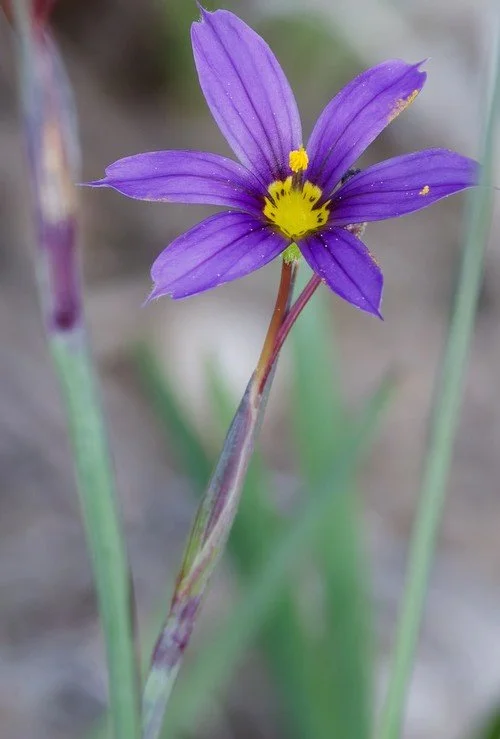 Image 1 of 2
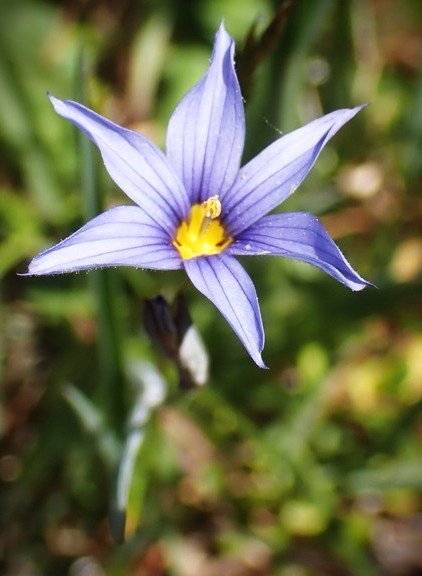 Image 2 of 2