Amsonias are perennials grown for two main reasons: the small, periwinkle-blue flowers that emerge from dark-blue buds in late spring to early summer and the dark-green, willow-like foliage which turns a brilliant yellow-gold in the fall! This ‘Blue Ice’ cultivar offers a very tidy and more compact form than the parent species. Mature plants grow into thick clumps 12 to 18-in. tall by 24-in wide, making them ideal for lining pathways and in the front of garden beds.
Full sun (6+ hours/day) is critical to produce this intense fall color, though the plant tolerates partial shade, and thrives in a wide variety of soils. While they need moderate moisture to establish, ultimately they will be drought-tolerant.
The prolific blooms attract bees, butterflies, and other pollinators. Like Euphorbias, Amsonias have milky sap in their stems, which makes them very resistant to predation by deer and rabbits, but also means gardeners should wear gloves when cutting flowers for displaying indoors.
Amsonias are perennials grown for two main reasons: the small, periwinkle-blue flowers that emerge from dark-blue buds in late spring to early summer and the dark-green, willow-like foliage which turns a brilliant yellow-gold in the fall! This ‘Blue Ice’ cultivar offers a very tidy and more compact form than the parent species. Mature plants grow into thick clumps 12 to 18-in. tall by 24-in wide, making them ideal for lining pathways and in the front of garden beds.
Full sun (6+ hours/day) is critical to produce this intense fall color, though the plant tolerates partial shade, and thrives in a wide variety of soils. While they need moderate moisture to establish, ultimately they will be drought-tolerant.
The prolific blooms attract bees, butterflies, and other pollinators. Like Euphorbias, Amsonias have milky sap in their stems, which makes them very resistant to predation by deer and rabbits, but also means gardeners should wear gloves when cutting flowers for displaying indoors.

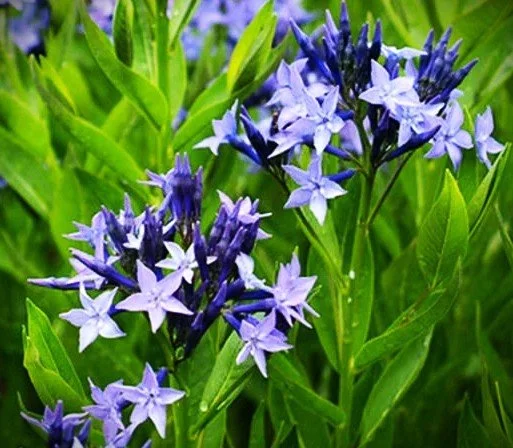 Image 1 of 3
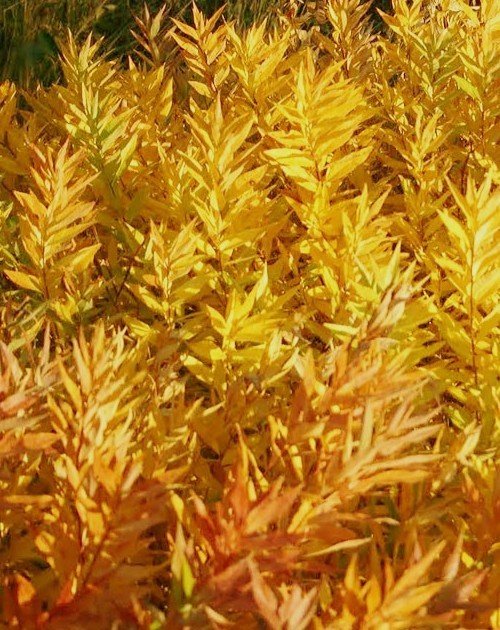 Image 2 of 3
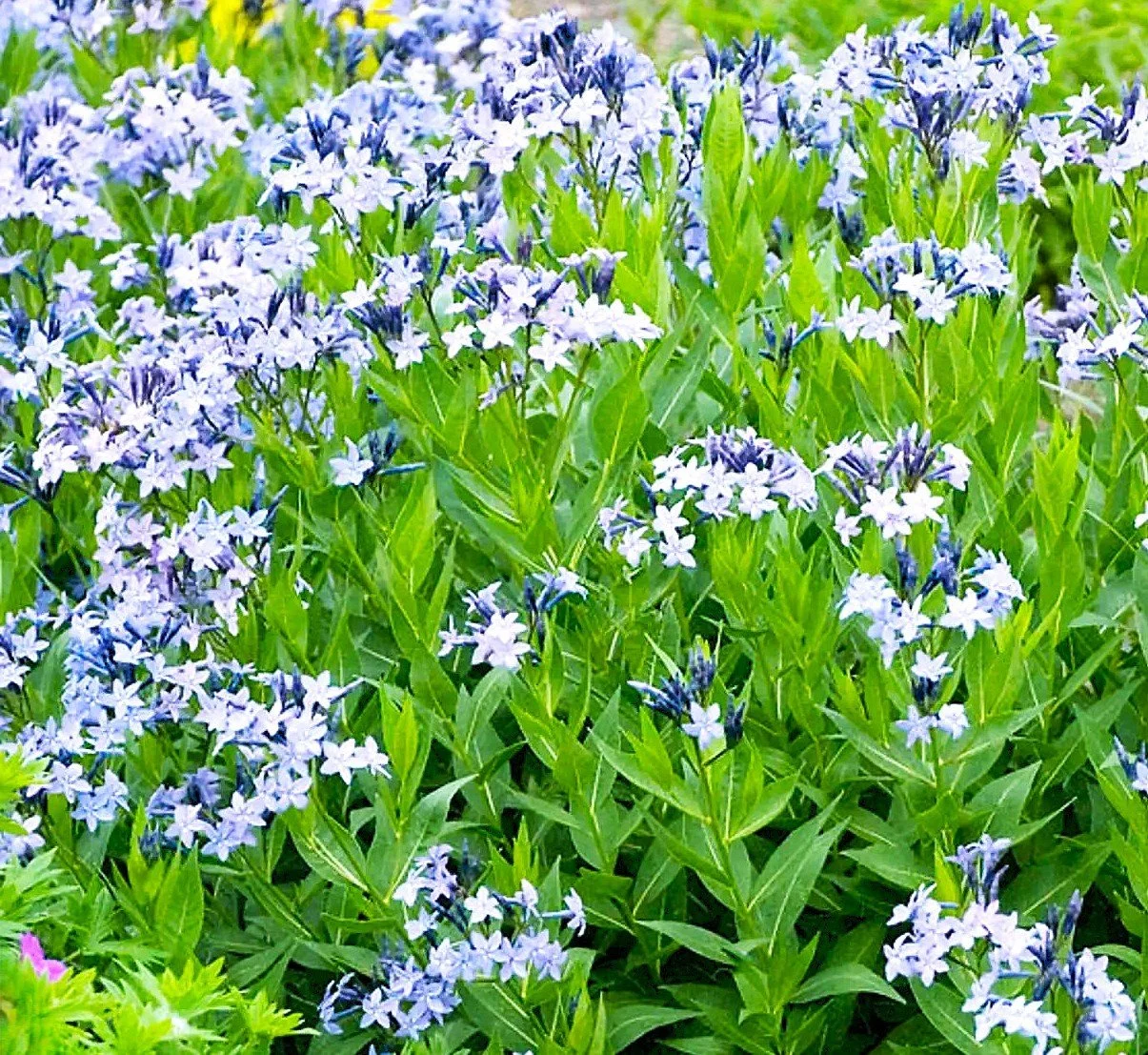 Image 3 of 3