A hard-to-find perennial native to our local mountains, this tubular-shaped flower will enhance many parts of your sunny to part-shady landscape while providing nectar for many pollinators! In its native habitat and mid- to high-elevations, it will grow out of rocky cliffs or appear as a forest understory, making it adaptable as we transfer it to our home landscapes.
The flowers are long and robust, pinky-lavender to pale purple, typically appearing in small clusters at the tips of long shoots with pretty toothed leaves. The “branches” of shoots emerge from a woody base and taproot, which anchors the plants and helps ensure their tolerance to drought conditions.
At lower elevations, plants may begin blooming as early as May, though typically later in summer and continuing for a few months, as new buds emerge as the ones above mature. Depending on the growing conditions, the plants will grow about 1 to 3 ft., often with a lateral growth pattern, especially if planted in a rock garden.
No matter where you place this, it will provide months of forage for pollinators and beneficial insects!
A hard-to-find perennial native to our local mountains, this tubular-shaped flower will enhance many parts of your sunny to part-shady landscape while providing nectar for many pollinators! In its native habitat and mid- to high-elevations, it will grow out of rocky cliffs or appear as a forest understory, making it adaptable as we transfer it to our home landscapes.
The flowers are long and robust, pinky-lavender to pale purple, typically appearing in small clusters at the tips of long shoots with pretty toothed leaves. The “branches” of shoots emerge from a woody base and taproot, which anchors the plants and helps ensure their tolerance to drought conditions.
At lower elevations, plants may begin blooming as early as May, though typically later in summer and continuing for a few months, as new buds emerge as the ones above mature. Depending on the growing conditions, the plants will grow about 1 to 3 ft., often with a lateral growth pattern, especially if planted in a rock garden.
No matter where you place this, it will provide months of forage for pollinators and beneficial insects!

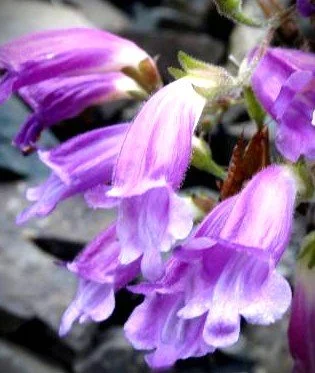 Image 1 of 3
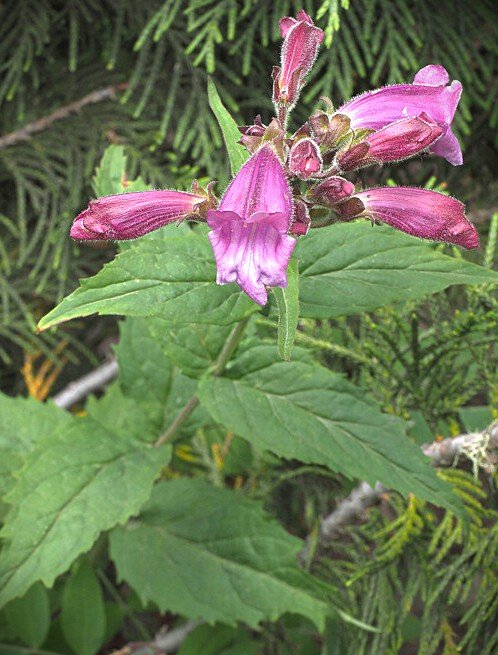 Image 2 of 3
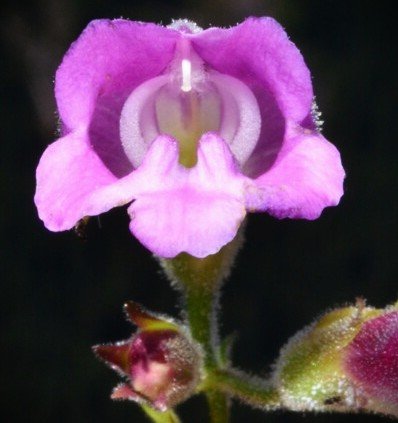 Image 3 of 3