This pretty yet sturdy daisy-like perennial is native to coastal areas a bit to our south, but thrives in many settings within our Northwest naturalistic landscapes, in sun to part shade. The large 2-in. flowers are the showstoppers and pollinator magnets: many-petaled pinky-lavender daisy-like flowers, with contrasting chartreuse centers. It blooms from spring to fall if you shear back when blooms start to fade.
This fleabane has a very tidy habit, reaching only about a foot or less in height (6-12 in.) and spreading out to about 18-24 in. wide from each plant.
It grows best in free-draining (and even rocky) soils, though it will tolerate clay when there’s a bit of drainage (such as a slope). It’s very drought tolerant once established. In addition to supporting pollinators, many beneficial insects use this plant form to keep garden pests at bay.
This pretty yet sturdy daisy-like perennial is native to coastal areas a bit to our south, but thrives in many settings within our Northwest naturalistic landscapes, in sun to part shade. The large 2-in. flowers are the showstoppers and pollinator magnets: many-petaled pinky-lavender daisy-like flowers, with contrasting chartreuse centers. It blooms from spring to fall if you shear back when blooms start to fade.
This fleabane has a very tidy habit, reaching only about a foot or less in height (6-12 in.) and spreading out to about 18-24 in. wide from each plant.
It grows best in free-draining (and even rocky) soils, though it will tolerate clay when there’s a bit of drainage (such as a slope). It’s very drought tolerant once established. In addition to supporting pollinators, many beneficial insects use this plant form to keep garden pests at bay.

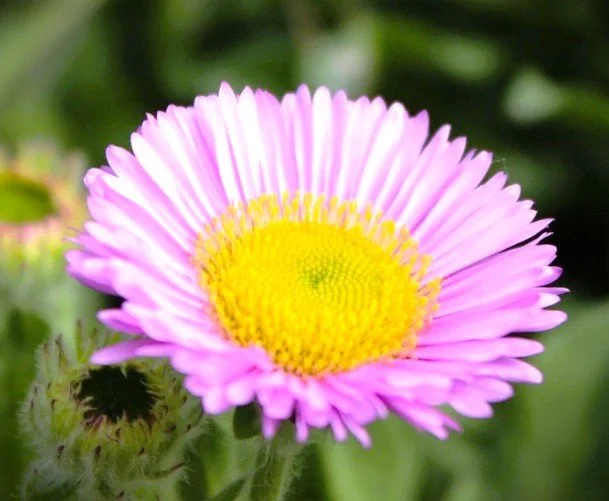 Image 1 of 3
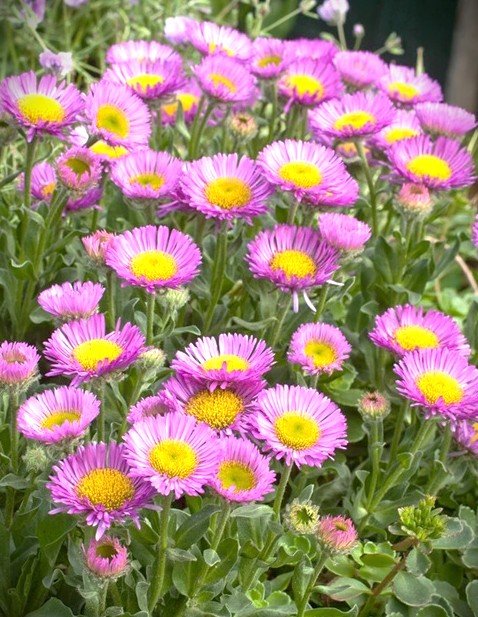 Image 2 of 3
 Image 3 of 3