Yellow-twig dogwood is a relative of our native Red-osier dogwood, and the two are terrific planted near each other, with their striking vibrant-red and chartreuse-yellow twigs brightening up the winter landscape. Yellow-twig is also a super choice contrasting with broadleaved evergreens, such as Tall Oregon-grape, Viburnum tinus, or one of the evergreen Osmanthus species.
In spring, flat-topped clusters of small, fragrant creamy-white flowers emerge from buds, supporting many pollinators and beneficial insects. The flowers become clusters of whitish fruits in summer, and are eaten by birds. The foliage puts on a bit of a show in fall, with colors ranging from golden-yellow to red.
This shrubby dogwood is more dwarf than red-osier, typically only growing about 6-9 feet tall with a slightly larger spread, as it will expand via rhizomes. Prune older stems in early spring to stimulate growth of new stems, which will display brighter color.
Another advantage: Though it is fully drought tolerant, it is also tolerant of a wide range of soils, including swampy or boggy conditions. Plant it in full sun to part shade.
Yellow-twig dogwood is a relative of our native Red-osier dogwood, and the two are terrific planted near each other, with their striking vibrant-red and chartreuse-yellow twigs brightening up the winter landscape. Yellow-twig is also a super choice contrasting with broadleaved evergreens, such as Tall Oregon-grape, Viburnum tinus, or one of the evergreen Osmanthus species.
In spring, flat-topped clusters of small, fragrant creamy-white flowers emerge from buds, supporting many pollinators and beneficial insects. The flowers become clusters of whitish fruits in summer, and are eaten by birds. The foliage puts on a bit of a show in fall, with colors ranging from golden-yellow to red.
This shrubby dogwood is more dwarf than red-osier, typically only growing about 6-9 feet tall with a slightly larger spread, as it will expand via rhizomes. Prune older stems in early spring to stimulate growth of new stems, which will display brighter color.
Another advantage: Though it is fully drought tolerant, it is also tolerant of a wide range of soils, including swampy or boggy conditions. Plant it in full sun to part shade.

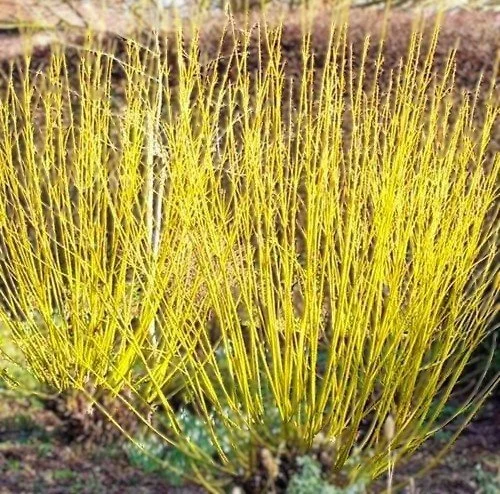 Image 1 of 3
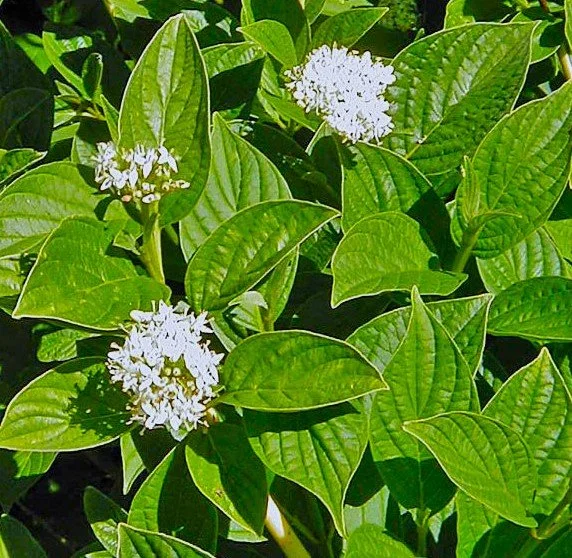 Image 2 of 3
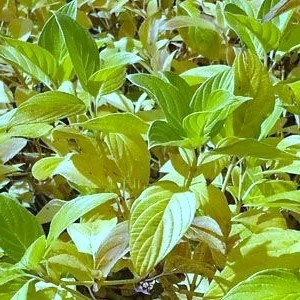 Image 3 of 3