
 Image 1 of 3
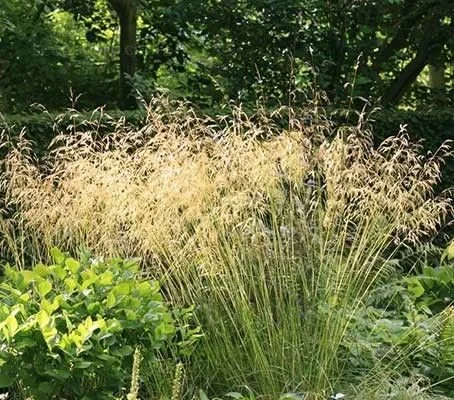 Image 2 of 3
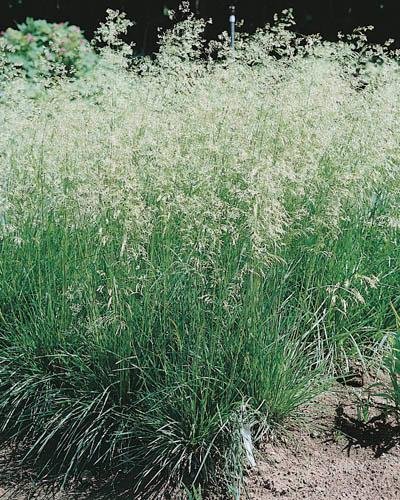 Image 3 of 3
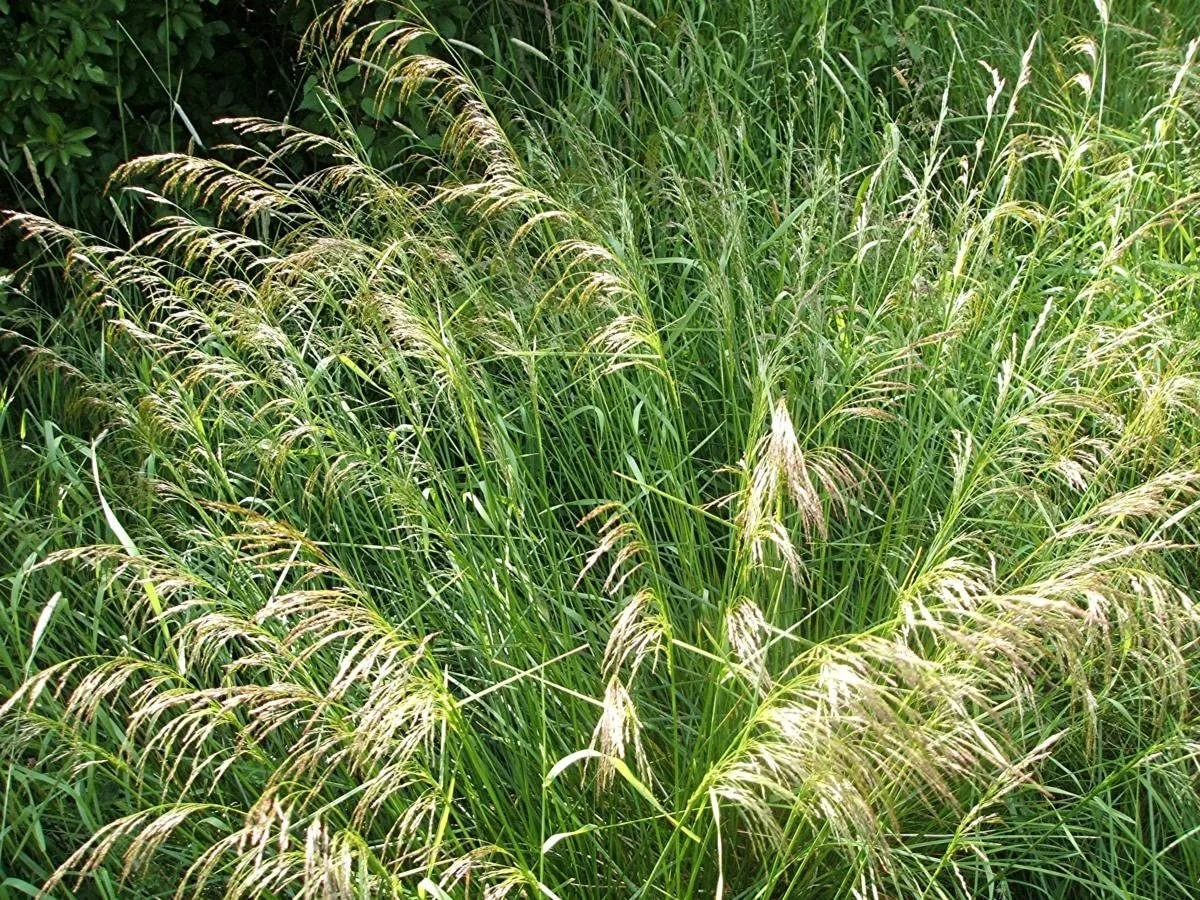
A relatively new cultivar of our PNW native grass that provides a more diminutive stature and an overall much tidier appearance than the straight species! Tufted hairgrass is beloved for its cloud-like blooms: fine, hair-like ethereal silver-white flowers appear in summer on sturdy stems, capturing the light and swaying dramatically in the wind - especially if left standing with seedheads all fall and winter! This selection stays dwarf: only 20-24 in. tall by 12-18 in. wide.
The leaves emerge green but turn gold in the late summer and maintain that color throughout the winter. Birds use the dense basal leaves for habitat or to forage for invertebrates, or make use of the seedheads. The grassy foliage remains less than a foot high with the summer blooms rising up and beyond. Tolerant of both moist and dry soils, in sun to part shade. Also tolerant of seashore environments, as they are found in coastal salt marshes and even sandy soils. Course-leafed, mature plants are deer and rabbit resistant, but young shoots may be grazed.
Attracts butterflies and is excellent for stabilizing streambanks and shorelines and for revegetation projects, or in Zone 1 of a rain garden. For the tidiest appearance, early spring cleanup only requires a gloved hand to quickly comb through the dense foliage, removing extraneous or dead biomass to make space for the newer growth.
A relatively new cultivar of our PNW native grass that provides a more diminutive stature and an overall much tidier appearance than the straight species! Tufted hairgrass is beloved for its cloud-like blooms: fine, hair-like ethereal silver-white flowers appear in summer on sturdy stems, capturing the light and swaying dramatically in the wind - especially if left standing with seedheads all fall and winter! This selection stays dwarf: only 20-24 in. tall by 12-18 in. wide.
The leaves emerge green but turn gold in the late summer and maintain that color throughout the winter. Birds use the dense basal leaves for habitat or to forage for invertebrates, or make use of the seedheads. The grassy foliage remains less than a foot high with the summer blooms rising up and beyond. Tolerant of both moist and dry soils, in sun to part shade. Also tolerant of seashore environments, as they are found in coastal salt marshes and even sandy soils. Course-leafed, mature plants are deer and rabbit resistant, but young shoots may be grazed.
Attracts butterflies and is excellent for stabilizing streambanks and shorelines and for revegetation projects, or in Zone 1 of a rain garden. For the tidiest appearance, early spring cleanup only requires a gloved hand to quickly comb through the dense foliage, removing extraneous or dead biomass to make space for the newer growth.