
NPSF’s Native Plant Nursery Moves to Broadfields Farm near Littlerock
By Stevie Mathieu: Native Plant Salvage Foundation board member
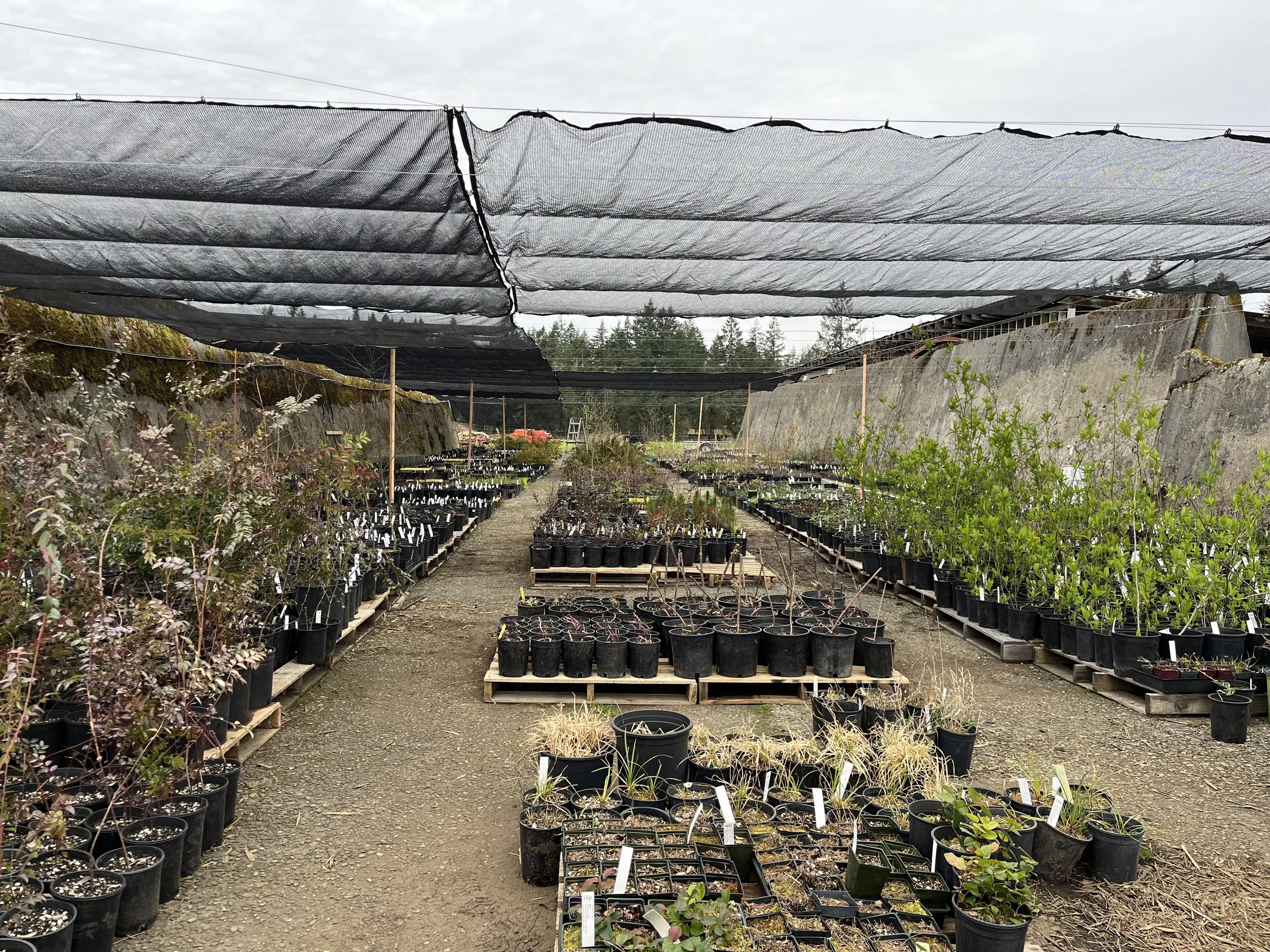
Thousands of native and waterwise plants fill the former silage bunker on Broadfields Farm, which was recently converted into the Native Plant Salvage Foundation’s new nursery storage space.
After more than two decades in west Olympia, the WSU Extension and Native Plant Salvage Foundation’s nursery has moved about 10 miles south to Broadfields Farm in the Littlerock area.
If you buy plants at the Foundation’s twice-yearly plant sale or volunteer at the nursery, make sure you head to the Farm to pick up your plants or help out instead of going to the old location.
Broadfields Farm, at 5047 Gifford Road SW, began serving as the nursery’s new location in late 2025 after the Washington State Department of Transportation alerted NPSF that the agency no longer had capacity to host the nursery at its west Olympia location.
The nursery is not a walk-in operation. It is only open for regular volunteer work parties, including as part of winter plant-salvage events, and it opens to the public during specific hours in support of the Foundation’s fall and spring online plant sales, when customers arrive for their scheduled plant-sale pickups.
The nursery also helps community members locate sometimes hard-to-find native and water-wise plants and is a place where volunteers learn about different native plants, how to propagate them, and how to successfully integrate them into their landscapes.
“The nursery is integral to NPSF’s mission of hands-on education and on-the-ground change,” said Erica Guttman, water-resources and habitat program coordinator for WSU Extension, NPSF’s partner organization. “Our Broadfields Farm partners share our commitment to ecological enhancements in our region, making for a terrific partnership.”
A big part of the move took place in November, when 65 volunteers contributed more than 400 hours over two days toward the effort. Many of those volunteers brought 27 personal pickup trucks or utility trailers, and the rest brought a whole lot of muscle, to transport thousands of plants, nursery equipment, tools, supplies, and infrastructure from the old site to the new nursery at Broadfields Farm.
In early January, NPSF hired a contractor to move two large tool sheds to the new nursery site as well.
The New Digs
Broadfields is a 200-acre family farm owned by Kevin and Chris Cornell that offers pasture-raised beef and supports a local food ministry. The bulk of the NPSF nursery’s plants are now housed within the concrete walls of an old silage bunker on the farm, and empty planting pots are stored in the farm’s old storage barn, a relic from the property’s past life as the DeVries Dairy.
The NPSF nursery grows and maintains more than 7,500 plants, most of them native to the Pacific Northwest, as well as other so-called “water-wise” non-native species that are drought-tolerant once established and don’t require pesticides or fertilizers, which can harm waterways and groundwater. A group of about a dozen dedicated volunteers run the weekly operations of the nursery, while many others show up throughout the year to assist with plant sales, native plant salvage events, and other activities.
Volunteers are outfitting the nursery’s new location with shade cloth to support shade-loving native plants, which have adapted to live in our forests’ dense understories. They’re also working on setting up an efficient irrigation system before summer arrives. So far, volunteers have enjoyed that the new nursery location is flat, making it easier to navigate, as well as the quiet and idyllic backdrop of the farm.
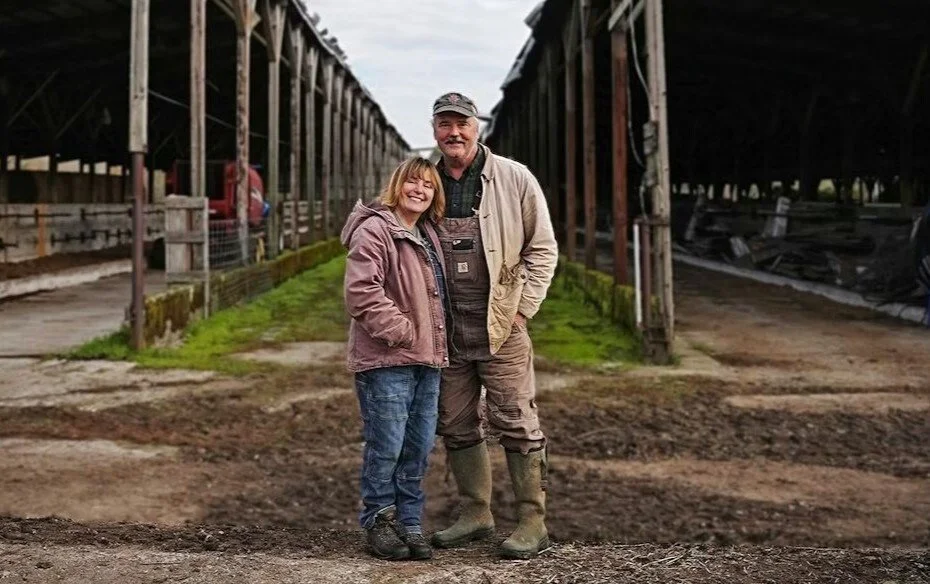
Chris (left) and Kevin Cornell, owners of Broadfields Farm. Photo courtesy of Experience Olympia & Beyond.
“One of the goals of Broadfields Farm is to be an active farm where the community gathers for environmental and outdoor education—a place where connection and hands-on experience happens,” farm owner Chris Cornell said. “The Native Plant Salvage Foundation is an established and thriving group of individuals who care about environmental stewardship and community. It is a good pairing of our missions, and it has been inspiring to see the intentional efforts to provide ongoing life to plants that would normally face displacement and destruction.”
Broadfields Farm is also the site of a demonstration hedgerow that was planted in the fall of 2025 in partnership with NPSF, WSU Extension, Thurston Conservation District, and funding partners Thurston County, Washington Conservation Commission, and USDA Natural Resources Conservation Service.
As the plants in the hedgerow grow to their full size and knit together, the dense planting—approximately 1,500 feet long and containing more than 2,400 plants—will provide several benefits, including wildlife habitat, groundwater protection, support for pest-eating insects, a natural windbreak, and shade and diverse nutrients for the cattle.
“Our nursery operations are key to our mission,” Guttman said. “Our volunteer leaders support broader environmental goals in Thurston County by growing specialty plants for our demonstration landscapes, such as agricultural hedgerows and rain gardens. These plants can be both challenging to locate in the region and often expensive. By NPSF growing them locally, they are available for community partners to use in these large-scale ecological planting projects.”
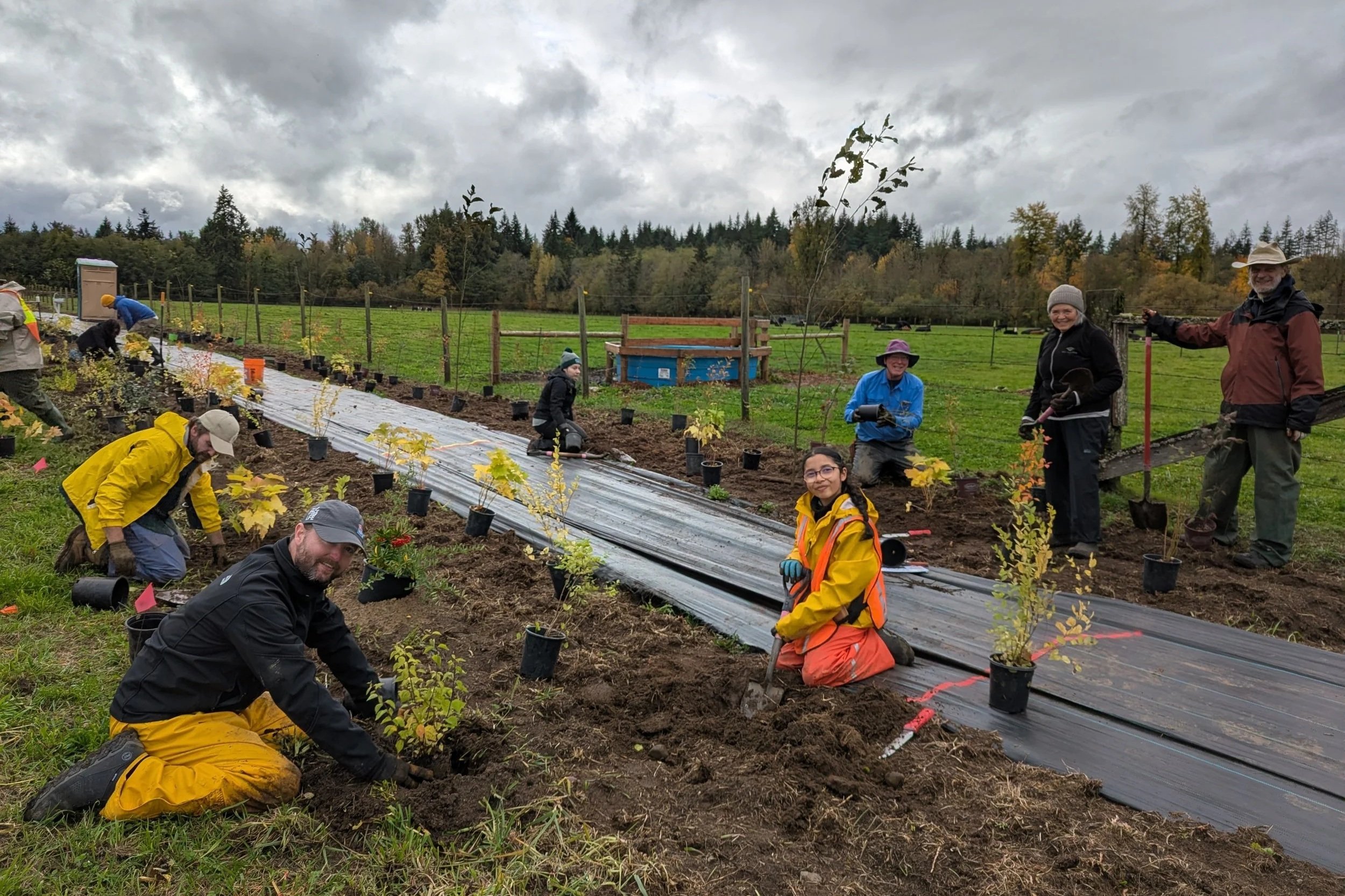
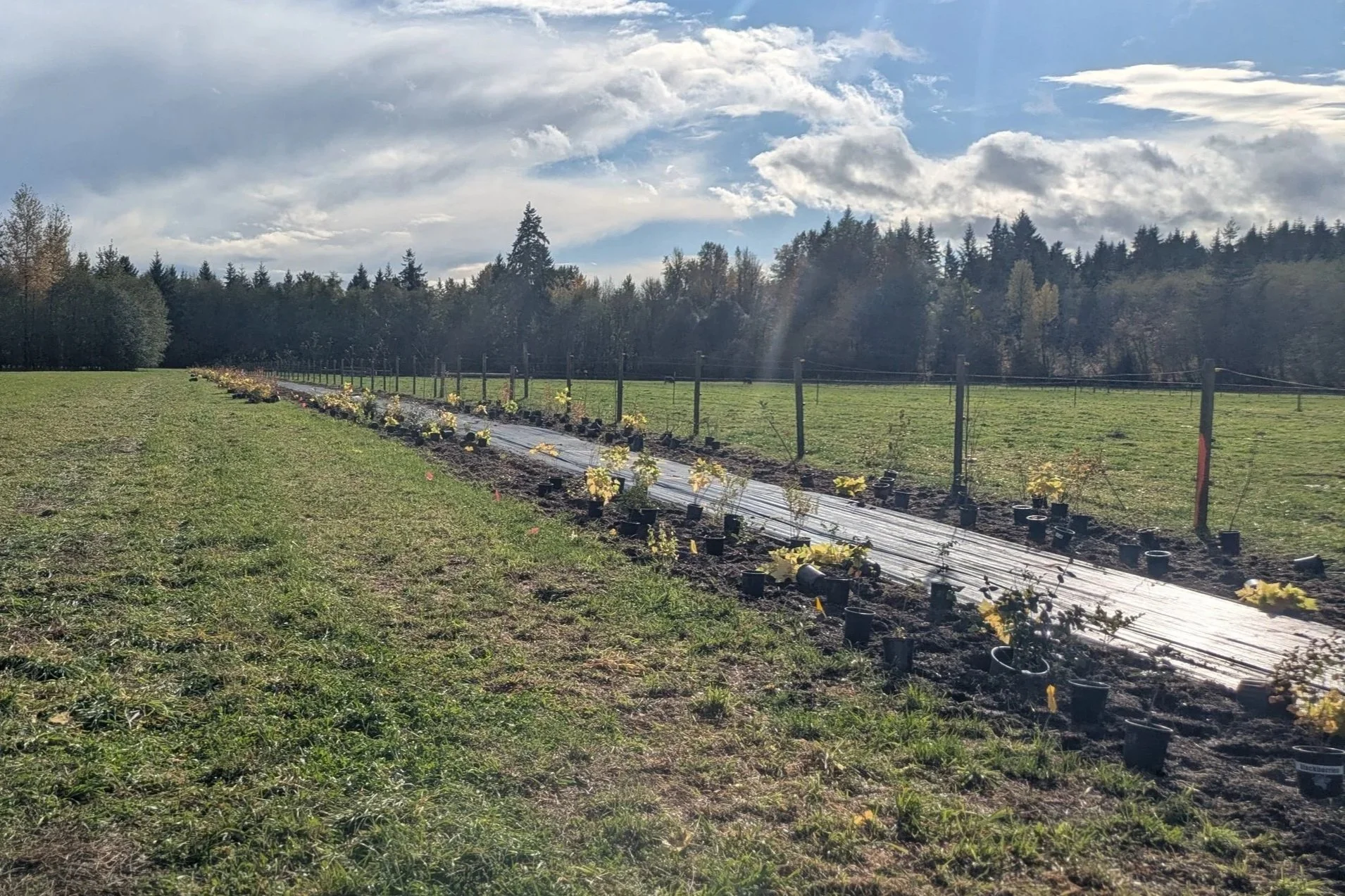
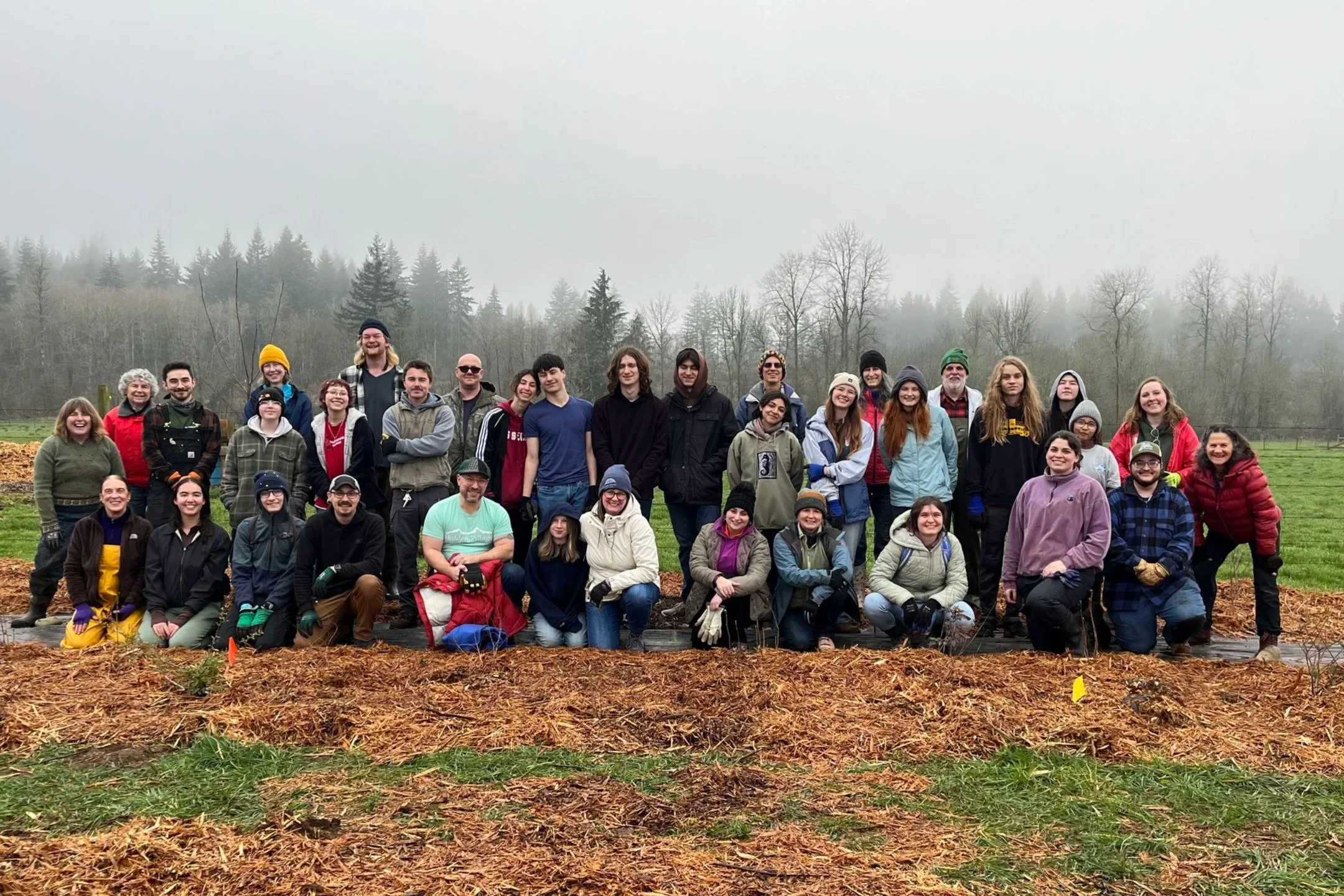
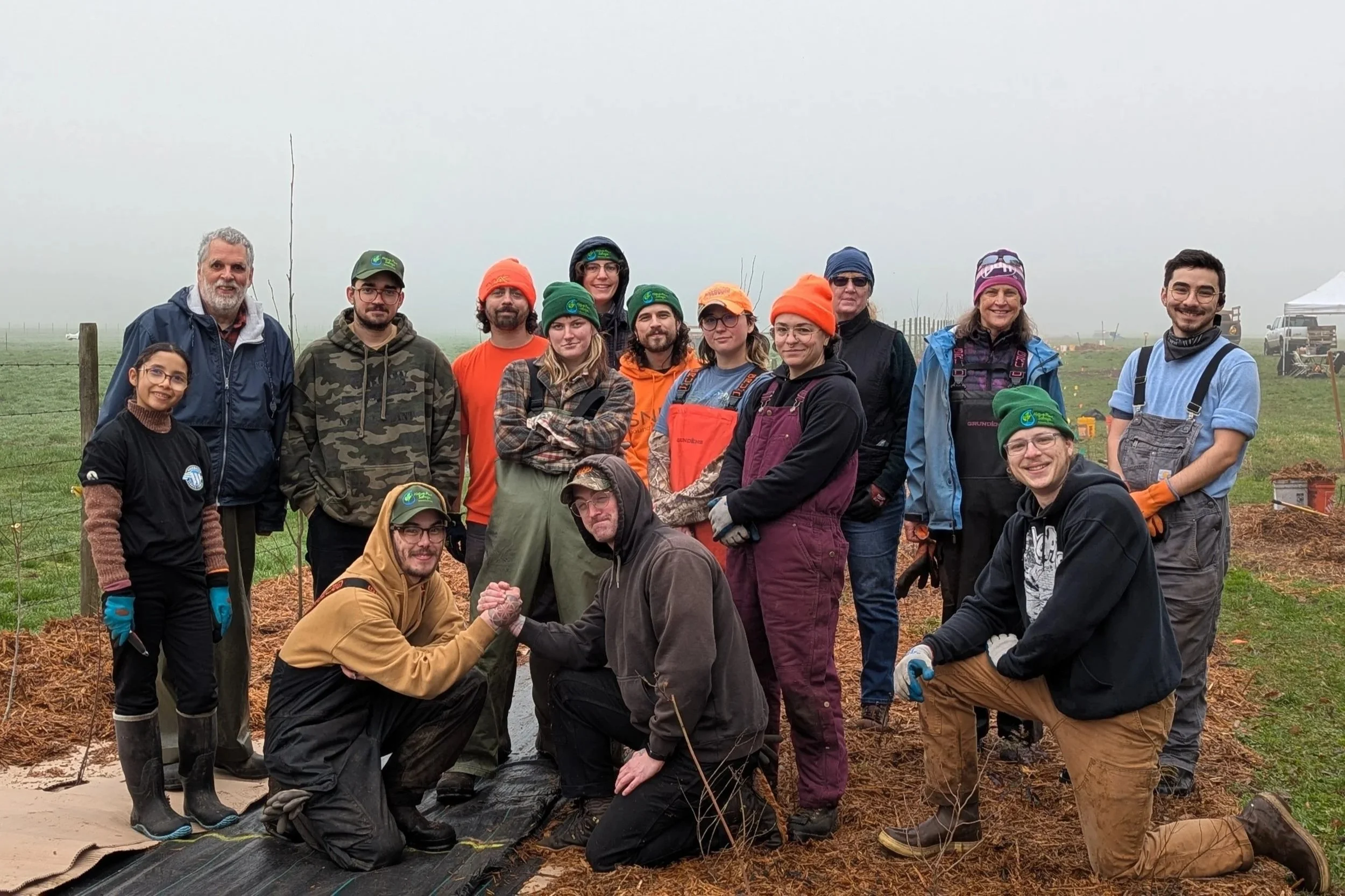
First image: Volunteers planting hundreds of native trees & shrubs along the hedgerow. Second image: The hedgerow after multiple days of volunteers helping to plant throughout November and December of 2025. Third image: Volunteers pose for a photo after a long day of adding mulch to the newly-planted hedgerow on Broadfields Farm during a Martin Luther King Jr. Day of Service event in January. Fourth image: Sound Native Plant’s restoration crew gathered together after adding mulch to the second half of the hedgerow on the following day.
Looking Ahead
It’s likely that Broadfields Farm will be a temporary home for the NPSF nursery. The long-term vision is to partner with another conservation-based organization where the nursery activities can be more fully integrated into environmental-education goals, possibly while ramping up production of much-needed native plants for local ecological restoration projects.
But while that future develops, NSPF appreciates the new partnership and support from the Cornells and the opportunity to enjoy volunteering in such a picturesque location.
For more about volunteering with NPSF, including opportunities at the new nursery, visit our calendar page or fill out our volunteer interest form.